
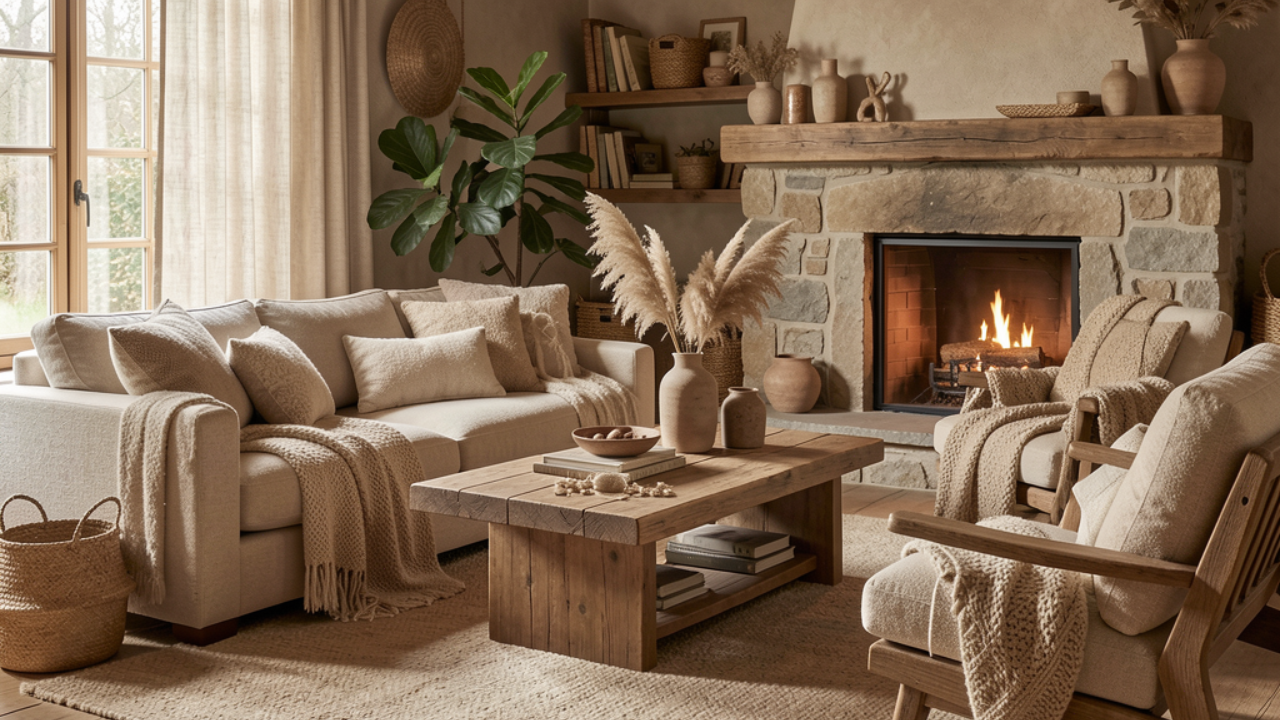
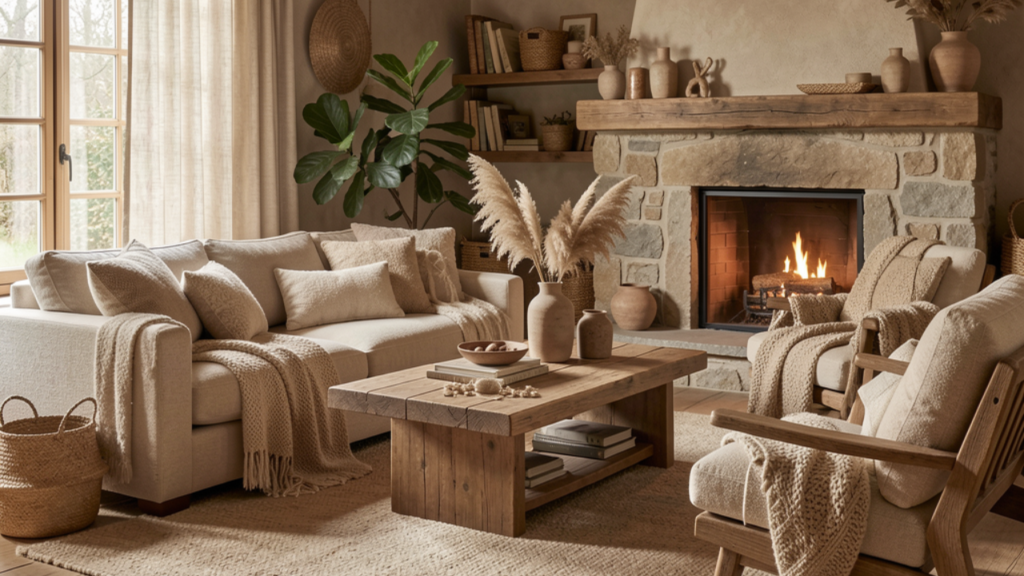
Introduction: The Green Home Revolution
The way we furnish, decorate, and maintain our homes is undergoing a profound transformation. As climate awareness deepens and consumer values shift, sustainable home products have moved from niche curiosity to mainstream necessity. In 2026, the sustainable home market is projected to surpass $150 billion globally, driven by a generation of homeowners who demand both beauty and responsibility from their living spaces.
This guide covers the hottest sustainable home product trends shaping interiors right now — from bamboo bedding and organic textiles to bio-based furniture and eco-friendly flooring. Whether you are redesigning a single room or overhauling your entire home, these trends offer a roadmap to a more conscious, beautiful living space.
1. Bamboo Sheets & Organic Bedding
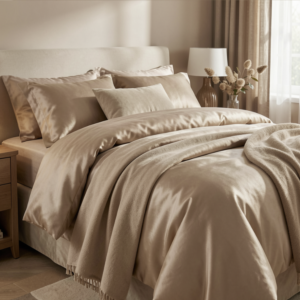
The bedroom is one of the easiest places to begin a sustainable home journey, and bamboo-derived textiles are leading the charge. Bamboo viscose (lyocell) sheets have become a staple of eco-conscious bedrooms thanks to the plant’s extraordinary regenerative properties — bamboo grows up to 35 inches per day without pesticides, irrigation, or replanting.
In 2026, the trend has evolved beyond basic bamboo sheets. Consumers are now seeking OEKO-TEX Standard 100-certified bedding that guarantees freedom from harmful chemicals throughout the entire supply chain. Kapok-filled duvets — using the silky fiber from the tropical kapok tree — are emerging as a cruelty-free, biodegradable alternative to down. Meanwhile, traceable merino wool blankets with full farm-to-bedroom transparency are gaining traction among premium buyers.
| Material | Key Benefit | Certification to Look For |
|---|---|---|
| Bamboo Lyocell | Thermoregulating, silky soft | OEKO-TEX, FSC |
| Organic Cotton | Breathable, hypoallergenic | GOTS Certified |
| Kapok Fill | Biodegradable, cruelty-free | OEKO-TEX |
| Traceable Wool | Naturally fire-resistant, durable | ZQ Merino, RWS |
| Hemp Linen | Antibacterial, gets softer with use | GOTS, OEKO-TEX |
2. Organic Linen & Hemp Curtains
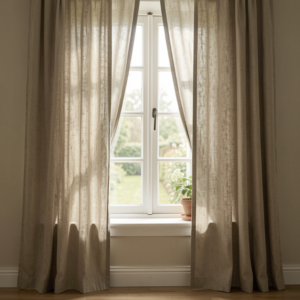
Window treatments are a surprisingly significant source of indoor air pollution. Conventional curtains are frequently treated with formaldehyde-based wrinkle-resistant finishes, flame retardants, and synthetic dyes — all of which off-gas into your living space for years. The 2026 trend toward organic linen and hemp curtains addresses this hidden hazard head-on.
Organic linen, made from flax grown without synthetic pesticides, is naturally temperature-regulating and grows more beautiful with age. Hemp curtains offer even greater durability — hemp fiber is one of the strongest natural textiles on earth — and the crop requires no herbicides and actually improves soil health. Look for curtains certified under the Global Organic Textile Standard (GOTS), which covers both the fiber and the dyeing process.
The aesthetic trend in 2026 leans toward undyed or naturally dyed textiles in earthy tones: warm oatmeal, sage green, terracotta, and deep indigo from plant-based dyes. These palettes pair beautifully with the biophilic design movement sweeping interior design.
3. Sustainable Furniture: Circular Design & Responsible Materials
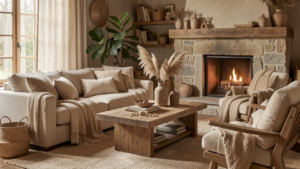
Furniture is where sustainability meets the longest lifecycle. A well-made sustainable piece purchased today should last decades — and ideally be repairable, recyclable, or compostable at end of life. The 2026 sustainable furniture landscape is defined by three key principles: responsible sourcing, circular design, and repairability.
FSC-certified solid wood remains the gold standard for timber furniture, ensuring forests are managed responsibly. However, new materials are challenging wood’s dominance. Sintered stone — made by compressing natural minerals at extreme heat — offers a near-indestructible, chemical-free surface for dining tables and countertops. Mycelium composites (grown from mushroom roots) are emerging as a genuinely biodegradable alternative for chair seats and decorative panels.
| Material | Sustainability Profile | Best Used For | Certification |
|---|---|---|---|
| FSC Solid Oak/Walnut | Responsibly harvested, long-lived | Tables, frames, shelving | FSC |
| Reclaimed Wood | Zero new deforestation | Dining tables, accent pieces | SFI, FSC |
| Sintered Stone | No VOCs, extremely durable | Tabletops, counters | GreenGuard Gold |
| Mycelium Composite | Fully biodegradable | Decorative panels, seating | Emerging standards |
| Recycled Aluminum | Infinitely recyclable | Outdoor furniture, frames | Cradle to Cradle |
The right-to-repair movement is also reshaping furniture design. Brands like Vitsoe (with its 606 Universal Shelving System) and emerging Scandinavian makers are designing furniture with replaceable components, published repair guides, and spare parts programs — a radical departure from the disposable flat-pack model.
4. Next-Generation Bio-Based Materials
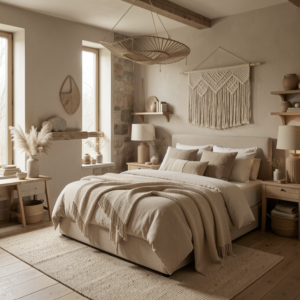
Perhaps the most exciting frontier in sustainable home products is the emergence of entirely new bio-based materials that replace leather, plastic, and synthetic foam. These innovations are moving from design-school concepts to commercially available products at a remarkable pace.
Pinatex, made from pineapple leaf fibers, is now widely available as an upholstery material for sofas and chairs — offering the look and feel of leather without any animal or petroleum inputs. Cactus leather (Desserto) is another plant-based leather alternative gaining traction in home accessories and accent chairs. For soft furnishings, seaweed-based textiles — developed by companies like Algaeing — are entering the market as a carbon-negative fiber option.
In the structural realm, hempcrete (a mixture of hemp hurds and lime) is being used in wall panels and insulation boards, offering excellent thermal performance and the ability to sequester carbon over its lifetime. These materials represent a fundamental shift from extractive to regenerative design.
5. Eco-Friendly Flooring
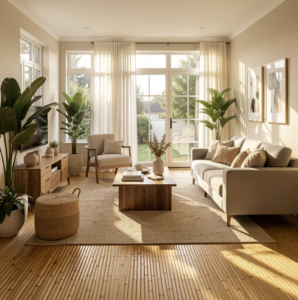
Flooring covers more surface area than any other element in a home, making it one of the highest-impact sustainability decisions a homeowner can make. The good news: the range of beautiful, durable, and genuinely sustainable flooring options has never been greater.
| Flooring Type | Key Benefit | Durability | Certification |
|---|---|---|---|
| Strand-Woven Bamboo | Harder than most hardwoods | Excellent | FSC, FloorScore |
| Cork | Naturally antimicrobial, cushioned | Good (resealable) | FSC, GreenGuard |
| Natural Linoleum | Made from linseed oil, biodegradable | Excellent (50+ years) | FloorScore, GreenGuard Gold |
| Reclaimed Hardwood | Zero new deforestation, unique character | Excellent | FSC (chain of custody) |
| Recycled Glass Tile | 100% recycled content, non-porous | Excellent | GreenGuard Gold |
Natural linoleum — not to be confused with vinyl — deserves special attention. Made from linseed oil, pine resin, wood flour, and jute backing, it is fully biodegradable, naturally bacteriostatic, and can last 50 years with proper care. It is experiencing a major design revival in 2026, with manufacturers offering it in bold geometric patterns and rich earth tones that rival luxury vinyl in visual appeal.
Cork flooring is another standout. Harvested from the bark of cork oak trees without harming the tree, it is naturally warm underfoot, acoustically insulating, and resistant to mold and mildew. New manufacturing techniques have dramatically expanded the design range, from classic natural tones to deep charcoal and painted finishes.
6. Biophilic Design & Living Walls
Biophilic design — the practice of integrating natural elements into built environments — has evolved from a design trend into a well-documented wellness strategy. Research consistently shows that exposure to natural elements reduces cortisol levels, improves cognitive function, and accelerates recovery from stress. In 2026, biophilic design is being expressed through increasingly sophisticated living wall systems, moss art panels, and integrated planting in furniture design.
Modular living wall systems from companies like Naava and Viesso allow homeowners to create lush vertical gardens with built-in irrigation and grow lighting, requiring minimal maintenance. Preserved moss walls — which require no water or light — offer a lower-maintenance alternative that still delivers the acoustic and aesthetic benefits of living plant material. These installations are particularly powerful in home offices, where they simultaneously reduce echo, improve air quality, and create a calming visual anchor.
7. Sustainable Kitchen Products
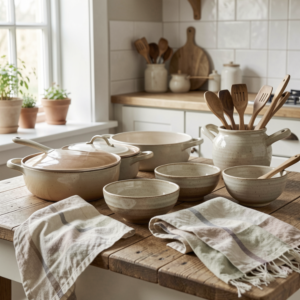
The kitchen is a hotspot for both waste and chemical exposure, making it fertile ground for sustainable upgrades. The 2026 trend in sustainable kitchen products is defined by the elimination of PFAS (per- and polyfluoroalkyl substances) — the “forever chemicals” found in most non-stick cookware — in favor of ceramic, cast iron, and carbon steel alternatives.
Beyond cookware, the sustainable kitchen movement encompasses beeswax wraps replacing plastic cling film, cellulose sponges replacing synthetic ones, glass and stainless steel food storage replacing plastic containers, and compostable dish brushes with replaceable heads. Collectively, these swaps can eliminate hundreds of single-use plastic items from a household annually.
The aesthetic trend pairs function with beauty: handmade ceramic bowls, linen dish towels in natural dyes, and wooden utensils from FSC-certified timber create a kitchen that is as visually appealing as it is ecologically responsible.
8. Sustainable Lighting
Lighting is both an energy issue and a materials issue. On the energy side, the transition to LED is largely complete in most markets — but the materials story is just beginning. In 2026, the trend is toward fixtures made from natural, reclaimed, or recycled materials that bring warmth and character to a space.
Rattan and bamboo pendant lights have become a signature element of the biophilic interior, casting dappled, organic light patterns that synthetic materials cannot replicate. Recycled glass pendant lights — made from reclaimed wine bottles or industrial glass waste — offer a striking industrial-meets-sustainable aesthetic. For table lamps, ceramic bases made by local artisans using natural glazes are gaining ground over mass-produced plastic alternatives.
The most forward-thinking development in sustainable lighting is the integration of solar-transparent surfaces into furniture and architectural elements — thin-film photovoltaic panels embedded in window glass or tabletops that generate electricity while maintaining transparency. This technology is moving from commercial buildings into high-end residential design in 2026.
9. Key Certifications to Know
Navigating sustainability claims requires understanding the certifications that carry genuine weight. Not all “eco-friendly” labels are created equal — some are independently verified against rigorous standards, while others are little more than marketing language.
| Certification | What It Covers | Why It Matters |
|---|---|---|
| GOTS (Global Organic Textile Standard) | Organic fiber + processing | Covers the entire supply chain including dyeing |
| OEKO-TEX Standard 100 | Harmful substance testing | Every component tested, including buttons and zippers |
| FSC (Forest Stewardship Council) | Responsible forest management | Gold standard for wood and paper products |
| GreenGuard Gold | VOC emissions from products | Critical for indoor air quality, especially for children’s spaces |
| Cradle to Cradle | Full lifecycle sustainability | Addresses material health, recyclability, and social fairness |
| FloorScore | Flooring VOC emissions | Specific to hard surface flooring products |
| B Corp | Company-wide social and environmental performance | Verifies the brand, not just the product |
10. Practical Tips for Building a Sustainable Home
Transitioning to a sustainable home does not require a complete overhaul overnight. The most effective approach is strategic and incremental — prioritizing the changes that deliver the greatest impact relative to cost and effort.
Start with what touches your skin. Bedding, towels, and upholstery are in constant contact with your body, making organic and chemical-free certifications especially important here. Prioritize longevity over price. A well-made FSC-certified oak dining table that lasts 50 years has a far lower environmental footprint than three generations of flat-pack replacements. Buy secondhand first. The most sustainable piece of furniture is one that already exists — vintage and antique markets, estate sales, and platforms like Chairish or 1stDibs offer extraordinary quality at prices that undercut new sustainable brands.
Check the supply chain, not just the product. A bamboo sheet with no certifications may have been processed with toxic chemicals. A “natural” paint may contain VOC-laden solvents. Look for third-party certifications that verify claims independently. Invest in repairability. Choose brands that offer spare parts, repair services, and published repair guides. A sofa with replaceable cushion covers and a replaceable frame will outlast any disposable alternative. Think about end of life. Before purchasing, ask: can this be composted, recycled, or repurposed? Products designed for circularity are the true frontier of sustainable home design.
The Bottom Line
The sustainable home products landscape in 2026 is richer, more beautiful, and more accessible than at any point in history. The convergence of consumer demand, material innovation, and regulatory pressure has produced a market where choosing sustainably no longer requires sacrificing aesthetics, quality, or budget. From bamboo sheets that rival the finest Egyptian cotton to mycelium furniture that returns to the earth at end of life, the options are extraordinary.
The most important shift is philosophical: moving from a model of consumption to one of stewardship. The home is not just a reflection of personal taste — it is a statement of values, a contribution to the built environment, and a legacy for the next generation. Choosing sustainable home products is one of the most tangible, immediate ways to align daily life with a vision of a more regenerative world.